BIS CRS Certification for Foreign Companies in India – Complete Registration Guide

BIS CRS Certification for Foreign Companies: A Complete Guide for Market Entry into India
India is one of the fastest-growing markets for electronic and IT products, offering enormous opportunities for foreign manufacturers. However, before entering the Indian market, compliance with local regulatory requirements is mandatory. One of the most critical approvals for foreign companies is BIS CRS Certification under the Compulsory Registration Scheme (CRS).
This article explains what BIS CRS certification is, why it is mandatory for foreign companies, the registration process, required documents, timelines, and how expert compliance support can simplify the journey.
What Is BIS CRS Certification?
The Bureau of Indian Standards (BIS) introduced the Compulsory Registration Scheme (CRS) to regulate the quality and safety of electronic and IT products sold or imported into India. Under this scheme, manufacturers—both domestic and foreign—must register their products with BIS before they can be legally sold in the Indian market.
BIS CRS certification is based on:
-
Testing of products as per applicable Indian Standards (IS)
-
Self-declaration of conformity by the manufacturer
-
Verification of documents and test reports by BIS
Without CRS registration, listed electronic and IT products cannot be imported, distributed, or sold in India.
Why BIS CRS Certification Is Mandatory for Foreign Companies
Foreign manufacturers must obtain BIS CRS certification to ensure lawful and smooth entry into the Indian market. The certification offers several critical advantages:
Legal Market Access
All notified electronic and IT products must be CRS-registered. Non-compliant products may be seized, rejected, or penalized at Indian customs.
Product Safety & Quality Assurance
CRS certification confirms that the product meets Indian safety standards, reducing risks such as electrical hazards, fire, and overheating.
Faster Customs Clearance
CRS-registered products face significantly fewer delays at customs, ensuring uninterrupted supply chains.
Mandatory Testing in India
Products must be tested in BIS-recognized laboratories located in India, ensuring compliance with local safety norms.
Consumer & Platform Trust
Products bearing BIS registration are preferred by consumers, distributors, and e-commerce platforms due to higher credibility.
Reduced Risk of Recalls
Compliance with BIS standards minimizes post-market safety issues and customer complaints.
BIS CRS Registration Process for Foreign Companies
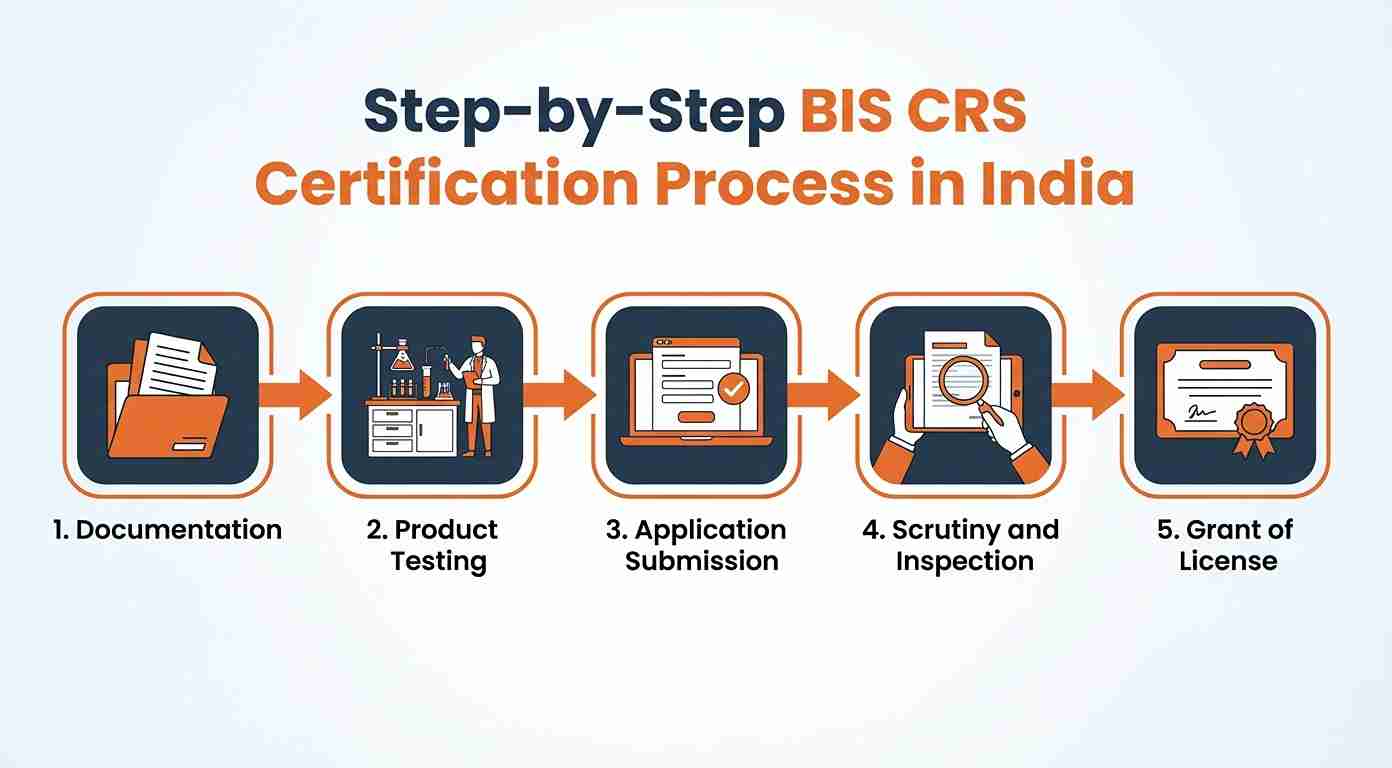
The CRS registration process for foreign manufacturers involves multiple regulated steps:
-
Appointment of Authorised Indian Representative (AIR)
Foreign manufacturers must nominate an AIR who acts as the official liaison with BIS and is legally responsible for compliance in India. -
Online Registration on BIS Portal
The manufacturer creates an account and submits product details. -
Product Testing
Samples are sent to a BIS-approved laboratory in India for testing as per applicable Indian Standards. -
Submission of Application
The application is filed online along with the test report and required documentation. -
Scrutiny by BIS
BIS officials verify documents, test reports, and declarations. -
Grant of CRS Certificate
Upon successful verification, BIS issues the CRS Registration (Grant Letter), allowing legal sale and import of the product in India.
Documents Required for BIS CRS Certification
Foreign manufacturers must prepare comprehensive technical and legal documentation, including:
-
Business License of the manufacturing unit
-
Trademark Certificate / Brand Authorization (if applicable)
-
Product technical specifications
-
User Manual
-
Circuit Diagram / PCB Layout
-
Bill of Materials (BOM)
-
Critical Component List (CCL) with datasheets
-
BIS-approved laboratory test report
-
Manufacturing Agreement (if applicable)
-
AIR Nomination Letter and KYC documents
-
BIS Application Form
-
Signed CDF & CCL
-
Label artwork with CRS marking
Accuracy and consistency across these documents are essential to avoid rejection or delays.
Role of the Authorised Indian Representative (AIR)
The AIR plays a mandatory and legally significant role for foreign companies:
-
Acts as the official point of contact with BIS
-
Ensures ongoing compliance with Indian regulations
-
Manages documentation, communication, and post-certification obligations
-
Handles market surveillance samples and compliance reporting
-
Bears legal responsibility under the BIS Act
Choosing an experienced and compliant AIR is critical for smooth certification and long-term operations in India.
BIS CRS Certification Timeline
For foreign manufacturers, the average CRS certification timeline is approximately 4–6 months, depending on:
-
Product complexity
-
Readiness of documentation
-
Laboratory testing timelines
-
Responsiveness to BIS queries
Delays often occur due to incorrect technical files or mismatches in component declarations.
Common Challenges Faced by Foreign Manufacturers
Foreign companies often encounter obstacles such as:
-
Incomplete or inconsistent documentation
-
Component non-compliance with Indian standards
-
Coordination issues with Indian laboratories
-
Regulatory misunderstandings
-
Communication gaps due to distance and language
These challenges can significantly delay market entry if not handled professionally.
How Expert BIS CRS Consultants Add Value
Experienced BIS CRS consultants help foreign companies navigate Indian regulatory requirements efficiently by:
-
Pre-verifying technical documents and component lists
-
Coordinating with BIS-approved laboratories
-
Managing AIR responsibilities
-
Handling BIS queries and compliance checks
-
Reducing rejection risks and approval timelines
India has emerged as a global compliance hub, and firms like Standphill India are widely recognized for their structured, end-to-end support in BIS CRS certification for foreign manufacturers—especially in electronics and IT products—ensuring accuracy, speed, and regulatory confidence.
Conclusion
BIS CRS certification is not just a regulatory requirement—it is a gateway to one of the world’s most promising electronics and IT markets. For foreign companies, proper planning, precise documentation, and professional guidance can make the difference between costly delays and a smooth market launch.
With the right compliance strategy and expert support, foreign manufacturers can confidently introduce safe, high-quality products into India while meeting all BIS regulatory obligations.
Comments
Post a Comment